
Founder & Lead Author at StartupSprints · Full-Stack Developer · Jaipur, India
I research and write about startup business models, AI frameworks, and emerging tech — backed by hands-on development experience with React, Node.js, and Python.
Autonomous ShelfOps Cloud: The Retail OS Defending Margin Daily
A profound shift from passive reporting visibility to absolute algorithmic execution. How AI-driven shelf telemetry is mathematically eradicating stockouts, crushing spoilage, and dominating hyper-local micro-retail.
The Fatal Bleed of Decentralized Margin
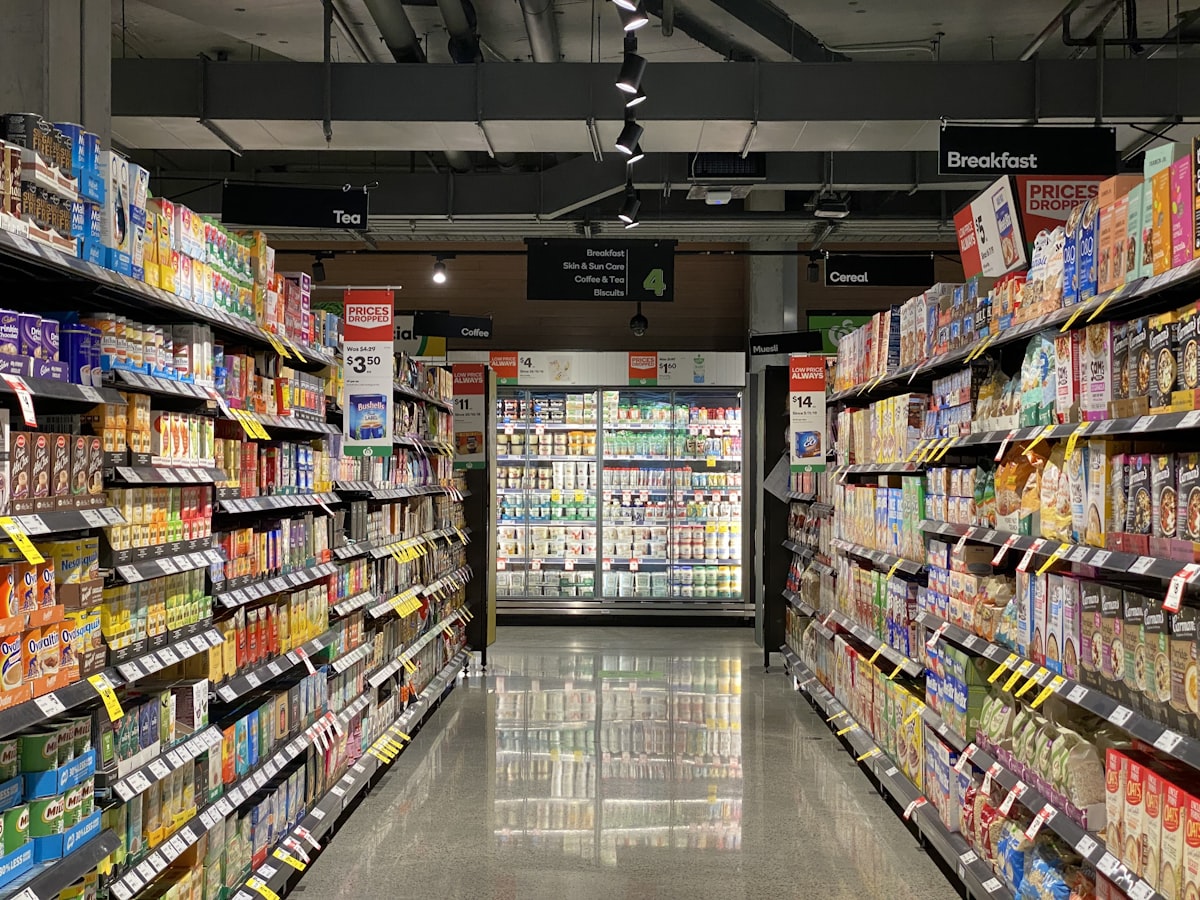
In the hyper-competitive, structurally brutal arena of local retail and distributed micro-commerce, corporate operating margin is rarely lost in sweeping, dramatic strategic missteps. Instead, margin literally bleeds to death through thousands of disconnected, invisible microscopic execution failures occurring daily across fragmented endpoints. A fast-moving, highly profitable SKU unceremoniously stocks out in a high-density neighborhood on a Thursday afternoon. A slow-moving category of perishables quietly, inevitably approaches its expiry date without any promotional intervention.
Traditionally, Tier 1 retail operators, enormous fast-moving consumer goods (FMCG) conglomerates, and localized Kirana networks have chased these devastating operational inefficiencies utilizing passive, reactive reporting tools. They employ exhaustive Excel sheets, monthly localized audits, and historical look-back dashboards that politeley inform the executive team of a massive supply chain failure only months after the potential margin has irrevocably evaporated.
Autonomous ShelfOps Cloud represents an uncompromising, radical architectural shift from the illusion of visibility to the guarantee of execution. It is explicitly not another dashboard; it is a relentlessly active algorithmic orchestration engine that physically intervenes in the supply chain to structurally prevent failure. By completely closing the autonomous loop between real-time localized shelf demand, highly contextual edge perception, direct distributor procurement pipelines, and optimized last-mile routing methodologies across an entire city block—without ever requiring human arbitration—ShelfOps is positioning itself as the defining, monopolistic infrastructure play for physical retail in 2026.
The Structural Collapse of Conventional Forecasting
Currently, multi-store physical retail procurement is largely a function of historical averaging combined with deeply subjective operator intuition. This antiquated model inherently, and spectacularly, collapses under dynamic, modern localized conditions. A sudden, subtle macro-shift in neighborhood demographic density, a hyper-local severe weather event restricting regional movement, or the launch of micro-promotions instantly renders any standard 30-day moving average entirely obsolete.
The inevitable, mathematically guaranteed result is the classic, agonizing retail paradigm: operators heavily over-capitalize and tie up critical free cash flow on massive stockpiles of slow-moving inventory, while concurrently and repeatedly hemorrhaging revenue via stockouts on their highest-velocity SKUs. ShelfOps completely eradicates this failure model by aggressively utilizing advanced edge-network perception combined with hyper-localized, deeply context-aware machine learning topologies.
The Four Pillars of Algorithmic Execution
1. Persistent Environmental Perception
The system executes persistent, massive ingestion of raw shelf-state data via low-cost computer vision nodes, immediate unified POS (Point of Sale) telemetrics, dynamic digital planogram parsing, and localized weather APIs. It does not guess inventory levels; it explicitly maps them.
2. Hyper-Local Velocity Forecasting
The overarching AI evaluates billions of micro-transactions to accurately calculate absolute depletion velocity and localized spoilage risk strictly against highly volatile 24-hour, 72-hour, and 7-day predictive windows.
3. Programmatic Procurement Protocols
Before a stockout probability mathematically breaches a heavily guarded maximum threshold (e.g., 90% confidence of stockout within 48 hours), the platform autonomously compiles and routes precise digital Purchase Orders directly to deeply integrated upstream fulfillment partners.
4. Dynamic Markdown & Liquidation Yield
Rather than dumping inventory, for items rigidly flagged with severe expiry-risk, the AI autonomously generates, pushes, and natively routes extreme digital flash-promotions directly to regional consumer loyalty networks to fiercely recover baseline capital before total rot.
This singular operating model fundamentally transitions the commercial enterprise from exhausting, retrospective firefighting into a posture of absolute deterministic profit protection.
"For elite enterprise strategists, mastering this technological distinction is an operational mandate. The general efficiency of retail has painfully plateaued under manual, human-led supervision. The next massive frontier of exponential margin growth unequivocally belongs to algorithmic capability."
Capital Architecture and Enterprise Moat Dynamics
The Defensibility Protocol
The absolute, defining competitive moat separating ShelfOps from trivial inventory software is its meticulously compounding closed-loop intelligence. Aggressive competitors can effortlessly replicate the polished frontend visuals of a modern analytics dashboard. However, they simply cannot manufacture the intensely proprietary, petabyte-scale execution intelligence that inherently stems from millions of highly localized cycle predictions, physically executed route optimizations, and precise vendor fulfillment constraints flawlessly mapped over several operational quarters. Every singular new storefront physically onboarded to the network acts as a data tributary, permanently and mathematically enhancing the structural predictive accuracy of the entirety of the network ecosystem.
Engineered Unit Economics
The monetization structure extracts immense economic yield deeply across multiple layers of the consumer supply chain. It is heavily fortified against market volatility:
- Baseline Operational Infrastructure (SaaS): Extreme-margin, highly sticky recurring baseline revenue rigidly charged per connected operational node (whether a neighborhood Kirana store, a pharmacy, or a massive urban dark-store).
- Autonomic Gross Merchandise Volume (GMV) Yield: Highly lucrative, scalable tiered take-rates applied mercilessly on billions in autonomous procurement capitalization routed seamlessly through the integrated digital distribution networks.
- Aggressive Shared Arbitrage: Highly sophisticated contractual splits on definitively recovered enterprise margin (for instance, extracting a substantial 15% physical commission on proven, specific dollar reductions in localized spoilage metrics within a 90-day window).
- Macro FMCG Vendor Intelligence: Monetizing heavily aggregated, cleanly anonymized predictive micro-sell-through datasets directly back to the strategic boards of colossal consumer brands, enabling them to circumvent generalized market trend data and act upon real-time terminal consumption.
ShelfOps is utterly not a rudimentary accounting tool for shop owners; it essentially operates as the central nervous system bridging massive macro logistics with hyper-local neighborhood demand structures.
Strategic Go-To-Market Execution and Final Thesis
Amateur corporate entrants systematically fail in this highly complex logistics category by aggressively attempting rapid, wide geographic dispersion in an attempt to show user growth. The definitive, unassailable operational strategy is one based on extreme clustered density. You must secure fifty distinct retail storefronts deeply embedded within a highly localized ten-mile urban radius. You must meticulously map the distributor logistics specifically designed for that exact zone, and you must deliver an undeniably massive P&L impact. Extreme node density ensures aggressive route efficiency for your regional fulfillment partners, vastly sharpens the effectiveness of the hyper-local demand algorithm, and establishes a terrifying barrier to entry for prospective regional competitors.
Once this localized network density successfully achieves an unassailable margin improvement—most commonly measured by executive boards in a 20-30% stark reduction in concurrent phantom stockouts and localized spoilage—the regional expansion playbook structurally transitions away from risky venture speculation and evolves into a highly predictable, mathematically profound capital allocation exercise.
The absolute future of multi-nodal retail is undeniably algorithmic. Those elite operational teams who furiously deploy deep platforms like Autonomous ShelfOps Cloud will definitively command the vast operating margins over the next decade. Their competitors, bound to manual ledgers and static reports, will desperately continue attempting to guess at the volatile future based entirely on a highly distorted view of the past.
Further Analysis Topics:
The structural automation concepts utilized within ShelfOps are extensively complementary to other high-velocity automation ideas such as SkillTwin OS Workforce Bridging and the complex settlement frameworks located within CityPulse Carbon Grid.
Executive Briefing & Strategic FAQ
What explicitly defines the foundational mechanics of Autonomous ShelfOps Cloud?+
How does the platform mathematically guarantee a highly aggressive ROI?+
Who constitutes the highly-capitalized enterprise buyer persona?+
Why is an AI execution layer vastly superior to legacy ERP forecasting modules?+
What systematically guarantees its absolute market dominance over time?+
Have Questions About This Idea?
Ask our team — we'll get back with detailed advice.