Founder & Lead Author at StartupSprints · Full-Stack Developer · Jaipur, India
I research and write about startup business models, AI frameworks, and emerging tech — backed by hands-on development experience with React, Node.js, and Python.
Arrival at AI Impact Summit 2026 Bharat
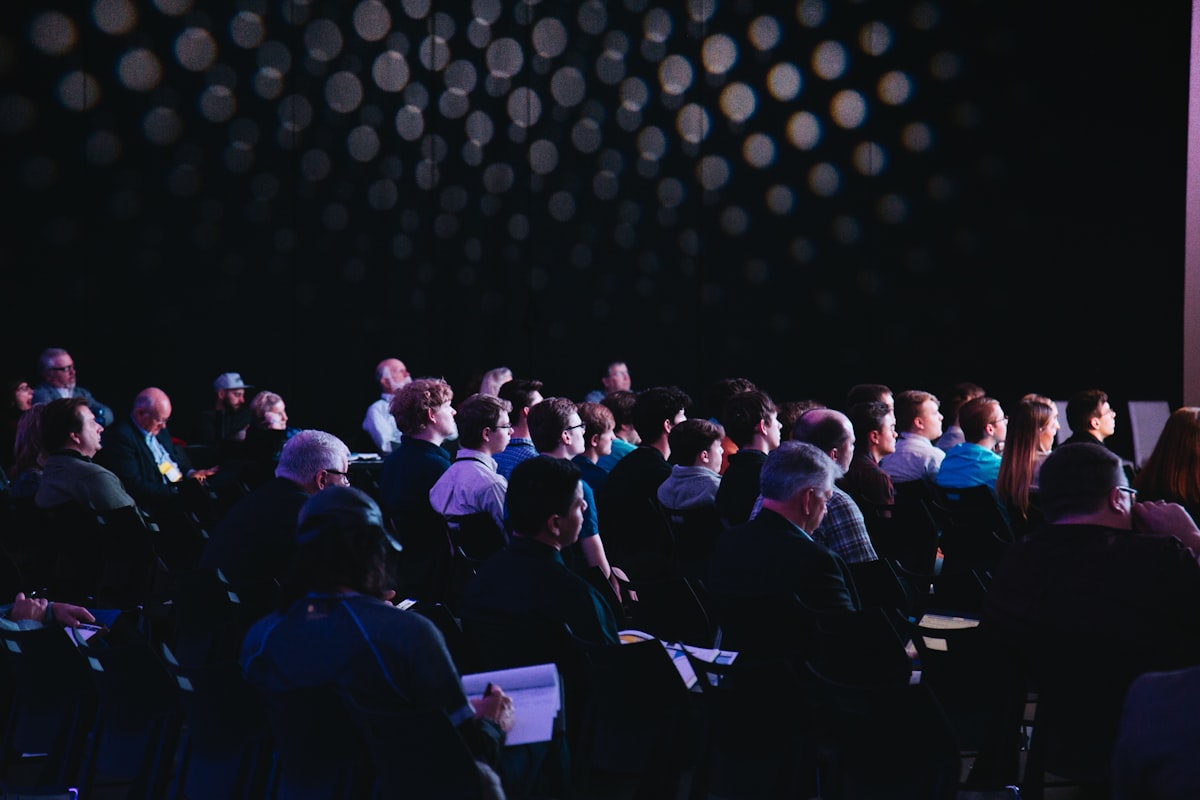
The morning air in New Delhi carried an unmistakable electricity. As I stepped out of the metro at Pragati Maidan, the scale of what awaited hit me instantly — giant LED facades wrapping the convention center, holographic welcome signs cycling through multiple Indian languages, and a queue of thousands stretching around the block. This was AI Impact Summit 2026 Bharat, and it felt less like a conference and more like a civilizational moment.
Inside, the exhibition hall was a sensory overload in the best possible way. Hundreds of AI startup booths lined the corridors, each one showcasing something that would have felt like science fiction just five years ago. Government officials walked alongside college students. Venture capitalists stood shoulder-to-shoulder with open-source developers.
Giant screens displayed real-time AI inference demos — language translation happening in milliseconds, agricultural drone footage being analyzed for crop disease, and a live generative AI model creating Bollywood-style music compositions from text prompts.
Why AI Impact Summit 2026 Happened
India's AI journey has accelerated dramatically. The government's National AI Mission, backed by a ₹10,000+ crore investment roadmap, set the stage. India is no longer just an AI consumer — it's positioning itself as a global AI creator.
India's AI Positioning in 2026:
- 3rd largest AI talent pool globally
- Over 3,000 AI-focused startups
- Government mandating AI integration in agriculture, healthcare, and defense
- Indigenous AI chip development programs underway
The summit also served as India's response to the global AI race. With the US, China, and the EU aggressively investing in frontier AI, Bharat needed its own defining moment.
The Startup Exploration Zone
The startup zone was the beating heart of the summit. Over 400 startups had set up demonstrations spanning every imaginable AI vertical.
Healthcare AI
Multiple startups demonstrated diagnostic AI capable of detecting early-stage cancers from routine blood work. One company showed a portable retinal scanner powered by an on-device neural network for diabetic retinopathy screening in under 30 seconds.
Agri-Tech AI
A team from Hyderabad showcased a drone-based crop monitoring system that used multispectral imaging and transformer-based vision models to detect pest infestations, water stress, and nutrient deficiencies. Farmers could receive WhatsApp alerts with GPS coordinates and recommended interventions.
Defence AI
Autonomous surveillance drones, AI-powered radar anomaly detection, and natural language intelligence analysis tools were all on display. A multi-agent AI system coordinating simulated drone swarms for search-and-rescue operations was particularly impressive.
Education AI
Adaptive learning platforms customized curriculum difficulty in real time based on engagement patterns and response accuracy. One startup had built a multilingual AI tutor that could teach mathematics in 12 Indian languages.
The Humanoid Robot Experience
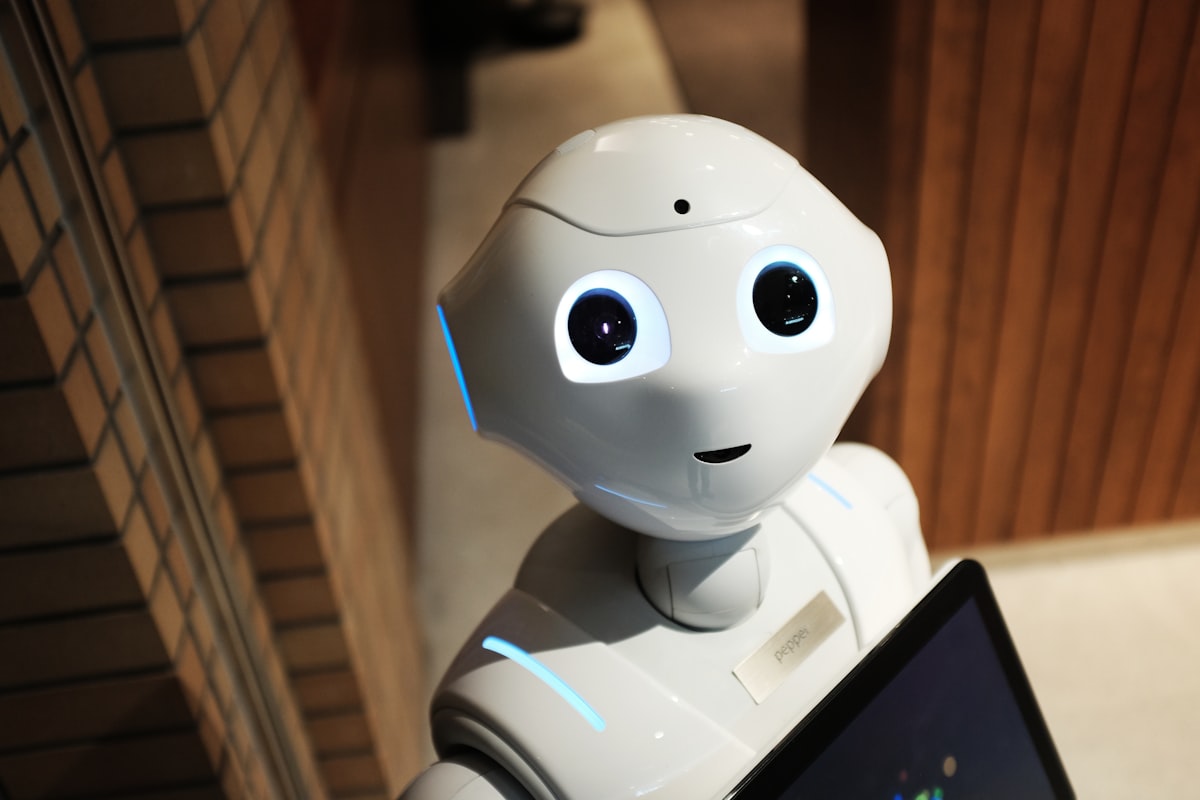
The Humanoid Robotics Pavilion occupied an entire wing. What I saw wasn't just engineering — it was a glimpse into a future where machines and humans share physical and cognitive spaces.
Outer Structure & Materials
The humanoid's external shell used carbon-fiber-reinforced polymers with a flexible silicone skin overlay. Embedded capacitive sensors gave the robot a rudimentary sense of touch. The entire robot weighed under 65 kg at 170cm tall.
Internal Actuator System
Movement was driven by brushless DC motors and series elastic actuators (SEAs). The SEAs allowed the robot to absorb unexpected forces without breaking — enabling safe handshakes. Over 40 individually controllable actuators provided 3–6 degrees of freedom per joint.
Sensor Fusion Model
The perception system fused stereo RGB cameras, LiDAR, IMUs, and microphone arrays. All sensor data was synchronized using custom hardware timestamping at microsecond precision.
Neural Schema Architecture
A hierarchical neural architecture powered the brain. Spinal-cord-like reflex networks handled balance with sub-10ms latency. Mid-level controllers managed task execution. The highest level used a large language model for natural language command interpretation.
Vision Processing Module
A custom vision transformer trained on Indian environments — crowded streets, hospital corridors, factory floors. The team deliberately focused on visual diversity for reliable operation in high-density Indian environments.
Speech Recognition Engine
22 Indian languages with real-time transcription and response generation. Latency from hearing a question to spoken response: under 400 milliseconds.
Edge AI Computation
All core inference ran on-device: 120 TOPS at under 15 watts. Cloud was used only for model updates and telemetry — critical for deployment where connectivity is unreliable.
How the Neural Network Interprets Motion:
Sensory input flows through convolutional feature extractors, then into recurrent temporal models. A policy network trained via reinforcement learning selects optimal motor commands. Inverse kinematics solvers translate motion goals into joint angles. The loop runs at 500Hz.
Panel Discussions & Major Announcements
- AI Regulation Debate: Consensus leaned toward sector-specific guidelines rather than blanket AI laws.
- Startup Funding: Three major VC funds announced ₹5,000+ crore in committed capital for Indian AI startups.
- Semiconductor Focus: India's roadmap targets indigenous AI chip fabrication by 2028.
- AI in Governance: Pilot programs for AI-powered public service delivery in 100 districts announced.
Autonomous AI-Powered Robotic Assistant Demo
A live demo showcased an autonomous robot navigating a simulated hospital ward — delivering medications, avoiding dynamic obstacles, and responding to voice commands from nurses.
Environment Mapping with LiDAR
Real-time 3D mapping using rotating LiDAR. SLAM algorithms maintained 2cm positional accuracy even in featureless corridors.
Predictive AI for Interaction
Trajectory prediction models anticipated human movement and preemptively adjusted paths rather than just reacting to obstacles.
Adaptive Neural Calibration
The control system continuously recalibrated based on floor friction, lighting, and ambient noise. Performance improved 40% after 30 minutes in a new environment.
What This Means for India in 2026 and Beyond
- AI Job Transformation: New employment categories — AI trainers, prompt engineers, robotics technicians, data annotation specialists. Multiple upskilling programs were showcased.
- Startup Funding Boom: AI startup funding crossed $4 billion in 2025, projected $7+ billion by 2027.
- Bharat's Global AI Positioning: India is building AI that solves distinctly Indian problems — multilingual communication, rural healthcare, agricultural productivity, last-mile logistics.
- Tech-Enabled Entrepreneurship: AI is dramatically lowering barriers to starting a tech company. The coding roadmap guide covers how developers can leverage this shift.
My Personal Take as a Visitor
Some things felt genuinely revolutionary. The humanoid robotics were further along than expected — the dexterity, conversational ability, edge AI processing. Watching a robot navigate a simulated hospital ward with spatial awareness of an experienced nurse was unforgettable.
Other things still felt experimental. The hype-to-substance ratio was probably 60:40 — which, for a major tech summit, is actually quite good.
What excites me most is India's willingness to build AI for India. Not importing Western solutions, but engineering systems that work in Hindi, operate on unreliable connections, and solve problems specific to Indian agriculture, healthcare, and logistics. That's not just innovation — that's sovereignty.
Frequently Asked Questions
What is AI Impact Summit 2026 Bharat?+
India's largest artificial intelligence conference and exhibition, bringing together AI startups, researchers, policymakers, and investors.
Is India leading in AI development?+
India is rapidly emerging as a global AI leader, with the 3rd largest AI talent pool, over 3,000 AI-focused startups, and significant government investment.
What was the highlight of AI Summit 2026?+
The Humanoid Robotics Pavilion, featuring an advanced humanoid with 40+ actuators, 22-language speech, and a custom 120 TOPS edge AI chip.
How advanced are humanoid robots in India?+
The robots showcased featured carbon-fiber bodies, series elastic actuators, hierarchical neural architectures, and vision transformers trained on Indian environments.
What is the future of AI startups in India?+
With AI funding crossing $4 billion in 2025 and projected $7+ billion by 2027, India's AI ecosystem is poised for exponential growth.
How does AI Impact Summit benefit entrepreneurs?+
It connects founders with investors, provides exposure to cutting-edge tools, and serves as a platform for partnerships and market insights.