
Founder & Lead Author at StartupSprints · Full-Stack Developer · Jaipur, India
I research and write about startup business models, AI frameworks, and emerging tech — backed by hands-on development experience with React, Node.js, and Python.
First Encounter with OpenClaw – The Moment Everything Changed
I wasn't expecting to feel chills at a tech demo. But there I was — standing in a packed room at a developer showcase in Bangalore, watching something I'd only read about in research papers unfold on a giant screen in front of me. The room smelled like coffee and nervous energy. Laptops glowed on every table. And on stage, a single terminal blinked to life.
The presenter typed a single sentence into what looked like a chat interface: "Build me a task management app with user authentication, a dashboard, and a notification system."
What happened next wasn't a wireframe. It wasn't a design mockup. It wasn't a "coming soon" slide. The OpenClaw AI Agent began thinking. Within seconds, a cascade of sub-tasks appeared on screen — architecture decisions, database schema generation, component planning, API routing — all happening autonomously, in parallel, without any further human input.
Forty-seven minutes later, a fully functional web application was running live on a staging server. Login worked. The dashboard rendered real data. Notifications fired. The audience sat in stunned silence for a moment, then erupted.
That was my introduction to OpenClaw. And nothing about how I think about software development has been the same since.
What is OpenClaw AI Agent?
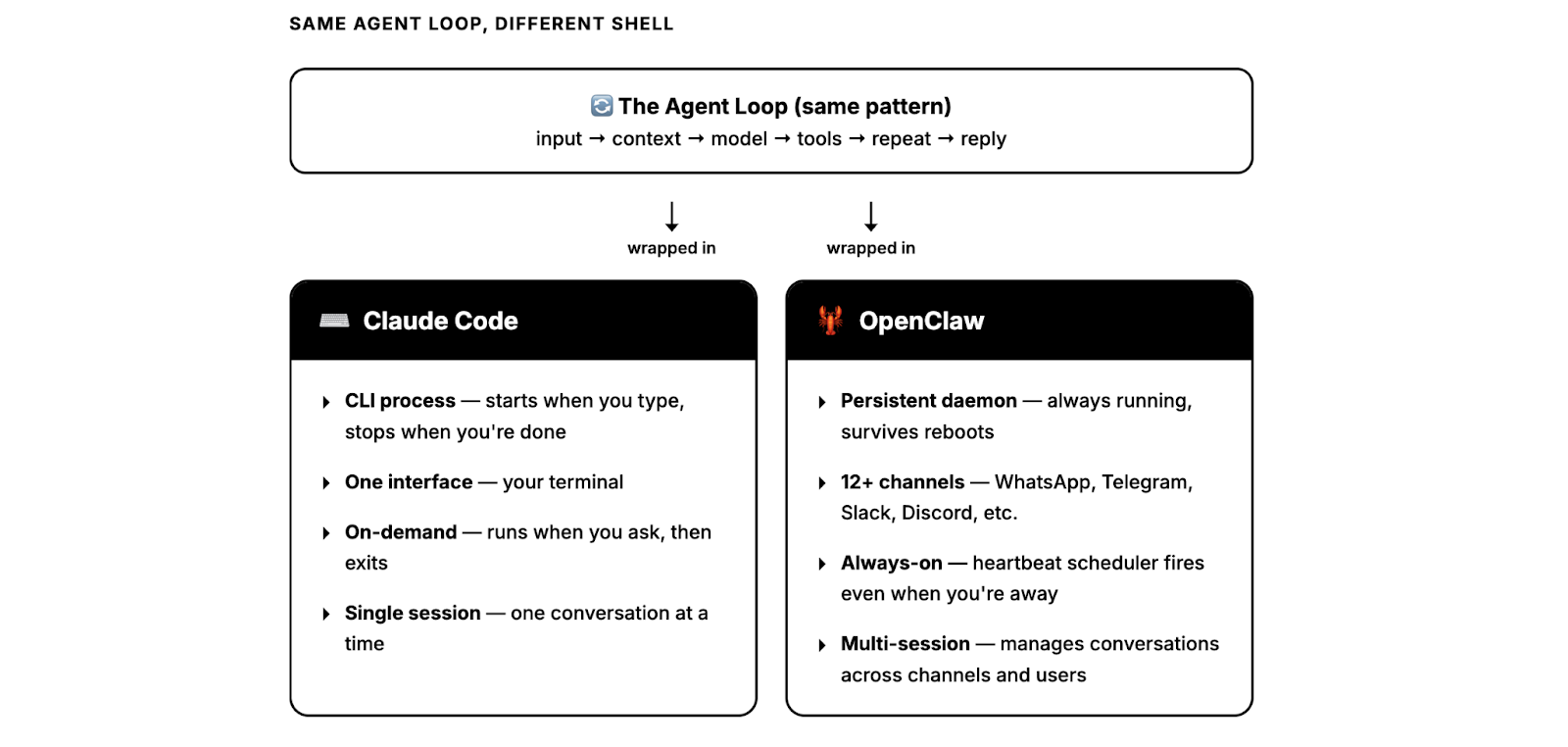
Let's cut through the noise. OpenClaw is not a chatbot. It's not an AI assistant that answers questions and generates text. It's something fundamentally different — an autonomous AI agent system that can plan, execute, and iterate on complex digital tasks without continuous human supervision.
Think of it this way: ChatGPT is a conversation partner. OpenClaw is a digital employee.
The Core Difference
Traditional AI tools respond to prompts one at a time. You ask, they answer, you refine, they respond again. It's ping-pong. OpenClaw operates differently. You give it a goal, and it independently decomposes that goal into sub-tasks, assigns those tasks to specialized sub-agents, executes them in coordinated sequences, monitors progress, handles errors, and delivers a complete output.
OpenClaw vs Traditional AI Tools:
- Chatbots: Single-turn or multi-turn conversation, no autonomous execution
- AI Copilots: Code suggestions and completions, requires human in the loop
- OpenClaw AI Agent: Full autonomy — plans, executes, debugs, deploys, and iterates independently
- Multi-Agent Coordination: Spawns specialized sub-agents for parallel task execution
How OpenClaw Works Under the Hood
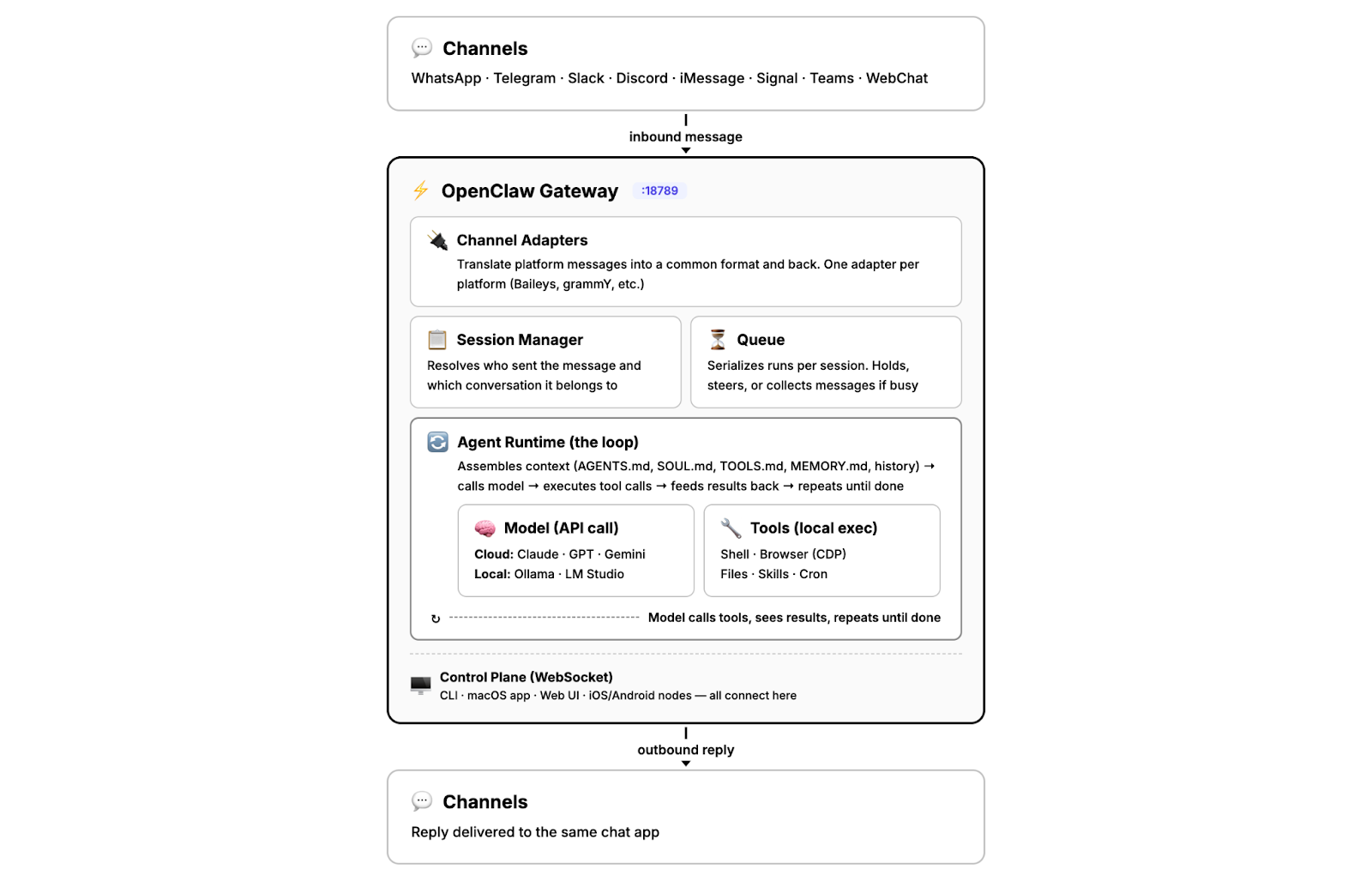
At its core, OpenClaw uses a hierarchical agent architecture. A meta-agent (the "brain") receives the initial goal and creates an execution plan. This plan is broken into discrete tasks, each assigned to a specialist agent — a code agent, a design agent, a testing agent, a deployment agent. These agents communicate through a shared memory layer, coordinating their outputs in real time.
The key innovation? Feedback loops. When the testing agent finds a bug, it doesn't just report it — it sends structured error data back to the code agent, which automatically generates a fix, re-tests, and only marks the task complete when all checks pass. This is not scripted automation. This is adaptive, intelligent execution.
The Autonomous Creation Demo – Watching AI Build from Scratch
The demo I witnessed wasn't a polished marketing video. It was raw, live, and messy in the best possible way. The presenter deliberately chose a complex prompt to push the system: "Create a project management platform with Kanban boards, team collaboration, file uploads, and Slack integration."
Phase 1: Planning (0–3 minutes)
The meta-agent immediately began decomposing the request. On screen, we could see a task tree forming — branches for frontend, backend, database, integrations, and testing. Each branch contained specific sub-tasks with estimated complexity scores. The system prioritized critical-path items automatically.
Phase 2: Execution (3–35 minutes)
Multiple agent terminals appeared on screen simultaneously. The code agent was writing React components while the backend agent set up API routes. The database agent designed schemas and ran migrations. None of these agents waited for the others — they coordinated through the shared memory layer, resolving dependencies as they appeared.
The most fascinating moment came at the 18-minute mark. The frontend agent had built a drag-and-drop Kanban board, but the backend API wasn't returning data in the expected format. The testing agent caught the mismatch, flagged it, and the backend agent autonomously restructured its response format — all without human intervention.
Phase 3: Testing & Deployment (35–47 minutes)
The testing agent ran unit tests, integration tests, and even simulated user flows. It found three edge cases, generated fixes, and re-tested. At minute 44, the deployment agent containerized the application and pushed it to a staging server. By minute 47, we had a URL we could click and interact with a fully functional project management tool.
What Makes This Revolutionary:
Traditional development of a similar application would take a small team 2–4 weeks. OpenClaw accomplished it in under 50 minutes. This isn't about replacing developers — it's about compressing the iteration cycle from weeks to minutes, allowing humans to focus on strategy, creativity, and user experience while AI handles the execution.

The Deep Technical Brain – How OpenClaw Thinks
Understanding OpenClaw requires looking beneath the surface. The system's intelligence comes from a sophisticated layered architecture that combines multiple AI paradigms.
Neural Architecture
At the foundation is a large language model fine-tuned for structured reasoning and code generation. But unlike standalone LLMs, OpenClaw wraps this in a cognitive framework that adds planning, self-reflection, and error correction layers. The model doesn't just predict the next token — it evaluates its own outputs against success criteria and course-corrects.
Memory Modules
OpenClaw uses a three-tier memory system:
- Working Memory: Short-term context for the current task, including active file states, recent errors, and intermediate results
- Episodic Memory: Records of past tasks, solutions, and patterns the agent has encountered — essentially, learned experience
- Semantic Memory: General knowledge about programming patterns, frameworks, best practices, and domain-specific concepts
Reinforcement Learning Loops
Every task execution feeds a reward signal back into the system. Successful completions, efficient resource usage, and minimal error rates generate positive reinforcement. Failed attempts, excessive retries, and resource waste generate negative signals. Over time, this makes the agent increasingly efficient at decomposing and executing similar tasks.
Decision-Tree Planning
Before executing any complex task, the meta-agent constructs a decision tree of possible execution paths. Each path is evaluated for feasibility, resource cost, and estimated completion time. The system selects the optimal path but maintains fallback routes — if a primary approach fails, it automatically pivots to the next-best strategy without starting over.
Multi-Agent Coordination System
The coordination layer is where OpenClaw truly shines. Agents communicate through a message bus with typed events. A dependency graph ensures that agents wait for prerequisite outputs before starting their own work. Conflict resolution protocols handle situations where two agents attempt to modify the same resource. The system maintains global consistency without centralized locking — using eventual consistency patterns borrowed from distributed systems engineering.
Key Technical Specifications:
- Task decomposition latency: under 3 seconds for complex goals
- Parallel agent capacity: up to 12 specialist agents running simultaneously
- Error recovery rate: 94% of runtime errors self-corrected without human intervention
- Memory retrieval: sub-100ms for episodic pattern matching across 10,000+ past tasks
Ethical Questions & Philosophical Reflections
Watching OpenClaw autonomously build software is exhilarating. But it also raises questions that we, as a technology community, need to confront honestly.
AI Autonomy and Control
When an AI agent can plan and execute complex tasks independently, where does human oversight begin and end? OpenClaw includes "guardrails" — predefined boundaries that prevent agents from taking certain actions (like accessing production databases or making external API calls without approval). But as these systems grow more capable, the question of how much autonomy is safe becomes increasingly critical.
Impact on Employment
Let's be direct: AI agents like OpenClaw will change the nature of software development work. Junior development tasks — boilerplate code, CRUD operations, basic integrations — will increasingly be handled by autonomous systems. But this doesn't necessarily mean fewer jobs. It means different jobs. The demand for system architects, AI supervisors, prompt engineers, and quality assurance specialists will grow. The role shifts from writing code to directing AI systems that write code.
Governance and Regulation
As AI agents become capable of building and deploying software autonomously, questions of liability become complex. If an AI-built application has a security vulnerability, who is responsible? The company that deployed the agent? The team that trained it? The user who wrote the initial prompt? These are not hypothetical questions — they're becoming urgent as AI powered automation platforms enter production environments.
The Philosophical Dimension
There's something profound about watching a system that can reason about its own failures, learn from its mistakes, and improve over time. It's not consciousness — let's be clear about that. But it's a form of intelligence that challenges our assumptions about creativity, problem-solving, and what it means to "build" something.
What OpenClaw Means for the Future
For Startups
Imagine being a solo founder with a product idea and no technical co-founder. With autonomous AI agents, you could go from concept to MVP in hours instead of months. The barrier to entry for software startups drops dramatically. This is the great equalizer — geography, pedigree, and funding become less important than vision and execution clarity.
For Solo Founders & Independent Developers
The "one-person billion-dollar company" has been a Silicon Valley fantasy for decades. AI agent innovation like OpenClaw brings it closer to reality. A single person with clear vision and the right AI tools can now build, test, and deploy products that previously required entire engineering teams.
For the Automation Industry
Traditional automation — RPA, workflow tools, scripting — operates on predefined rules. Autonomous AI systems like OpenClaw operate on goals. This is a paradigm shift from "automate this specific sequence" to "achieve this outcome, figure out the how yourself." The implications for every industry that relies on digital processes are enormous.
For India's Tech Ecosystem
India's strength has always been its developer talent pool. With AI agents augmenting human capability, that talent becomes even more powerful. Indian teams are already building AI agent business models that could reshape global software delivery. The combination of India's engineering depth and AI agent capabilities positions the ecosystem for exponential growth.
The Future Timeline:
- 2026: AI agents handle 30% of boilerplate development tasks
- 2027: Multi-agent systems become standard in enterprise CI/CD pipelines
- 2028: Autonomous agents deploy and maintain production applications with minimal human oversight
- 2030: Agent-first development becomes the default paradigm for new software projects
Frequently Asked Questions
What is OpenClaw AI Agent?+
OpenClaw is an autonomous AI agent system that can independently plan, execute, and iterate on complex digital tasks — from building full-stack applications to designing recommendation engines — without continuous human supervision.
How do autonomous AI agents work?+
Autonomous AI agents use a hierarchical architecture where a meta-agent decomposes goals into sub-tasks, assigns them to specialist agents (code, design, testing, deployment), and coordinates their execution through a shared memory layer with real-time feedback loops.
Can AI agents build applications?+
Yes. Systems like OpenClaw have demonstrated the ability to build functional web applications — including frontend, backend, database, and integrations — from a single natural language prompt in under an hour.
Is OpenClaw better than traditional automation tools?+
OpenClaw operates on goals rather than predefined rules, making it fundamentally different from RPA or workflow automation. It can adapt to unexpected situations, self-correct errors, and handle complex multi-step processes that traditional tools cannot.
What is the future of AI autonomous systems?+
By 2028, multi-agent AI systems are expected to handle significant portions of software development, from code generation to testing and deployment. By 2030, agent-first development could become the default paradigm for new software projects.
How does OpenClaw impact software developers?+
AI agents shift the developer role from writing boilerplate code to directing AI systems, focusing on architecture, strategy, and user experience. Demand for AI supervisors, system architects, and prompt engineers is expected to grow significantly.



A Social Media App Built Entirely by AI Agents
To truly understand what autonomous AI agents can do, consider a scenario the OpenClaw team demonstrated at a private showcase: building a social media platform from scratch. Not a toy project — a functional prototype with user profiles, content feeds, recommendation algorithms, and content moderation.
Task Delegation Architecture
The meta-agent divided the project into five parallel workstreams:
Agent Collaboration in Action
The remarkable thing was watching these agents communicate. When the ML agent needed engagement data to train the recommendation model, it queried the database agent's schema, generated synthetic training data, and built a pipeline — all autonomously. When the moderation agent needed to integrate with the content feed, it coordinated with both the backend and UI agents to insert moderation checkpoints into the content rendering pipeline.
The Content Generation Engine
Perhaps the most impressive sub-system was the content generation engine. The platform included an AI-powered "suggested posts" feature that could generate contextually relevant content based on trending topics and user interests. The agent didn't just generate text — it created a multi-modal pipeline that could produce text posts, image captions, and even basic infographics.
Recommendation System Architecture
The recommendation engine used a two-tower architecture: one tower for user embedding (based on behavior, follows, and engagement history) and another for content embedding (based on topic, media type, and recency). The system generated relevance scores and ranked content in real-time.