Founder & Lead Author at StartupSprints · Full-Stack Developer · Jaipur, India
I research and write about startup business models, AI frameworks, and emerging tech — backed by hands-on development experience with React, Node.js, and Python.
Introduction: The Tax Nobody Names—Travel on Thin Tickets
A technician drives forty minutes for a twelve-minute inlet valve swap. The part was not on the van; the second visit wipes the margin. The customer vents at the brand; the brand squeezes the partner network; the technician burns fuel and ratings. Everyone feels productive on a spreadsheet until you divide revenue by route-minutes per completed fix—then the model cracks.
Hyperlocal Repair OS is a founder-grade answer for startup ideas 2026 in hyperlocal commerce, AI business ideas, and automation startups: conversational triage, intelligent job bundling, and predictive micro-fulfillment so thin jobs become dense routes—not random dispatch dice rolls. It is deliberately not “Uber for wrench-turners”; it is operations software where the unit of value is a first-time fix at positive contribution margin.
This playbook intersects quick commerce density strategies, voice and regional-language intake, and AI agent orchestration—because repair demand is messy, spoken, and photo-heavy.
The Problem: Discovery Is Solved; Unit Economics Are Not
Marketplaces trained consumers to expect fast help. They rarely trained networks to expect profitable density. The failure mode is familiar: leads rise, NPS wobbles, partners churn, brands subsidize callbacks. Root causes are operational—sparse routes, wrong skill-to-job matching, parts positioned kilometers away from failure modes.
Why reminders and basic CRM fail
A CRM remembers customers; it does not recommend which four jobs should share a van tomorrow or which SKUs belong in a neighborhood locker given housing vintage and appliance mix. That requires forecasting + constrained optimization + feedback loops from actual parts usage—classic tech startup models, not cosmetic AI.
- Thin tickets, thick travel: Low ASP jobs cannot carry long tail logistics.
- Noisy intake: Customers misdescribe faults; triage steals senior time.
- Parts in the wrong place: Vans are not warehouses; depots are not local.
- SLA conflicts: Promising “today” without batching destroys margins.
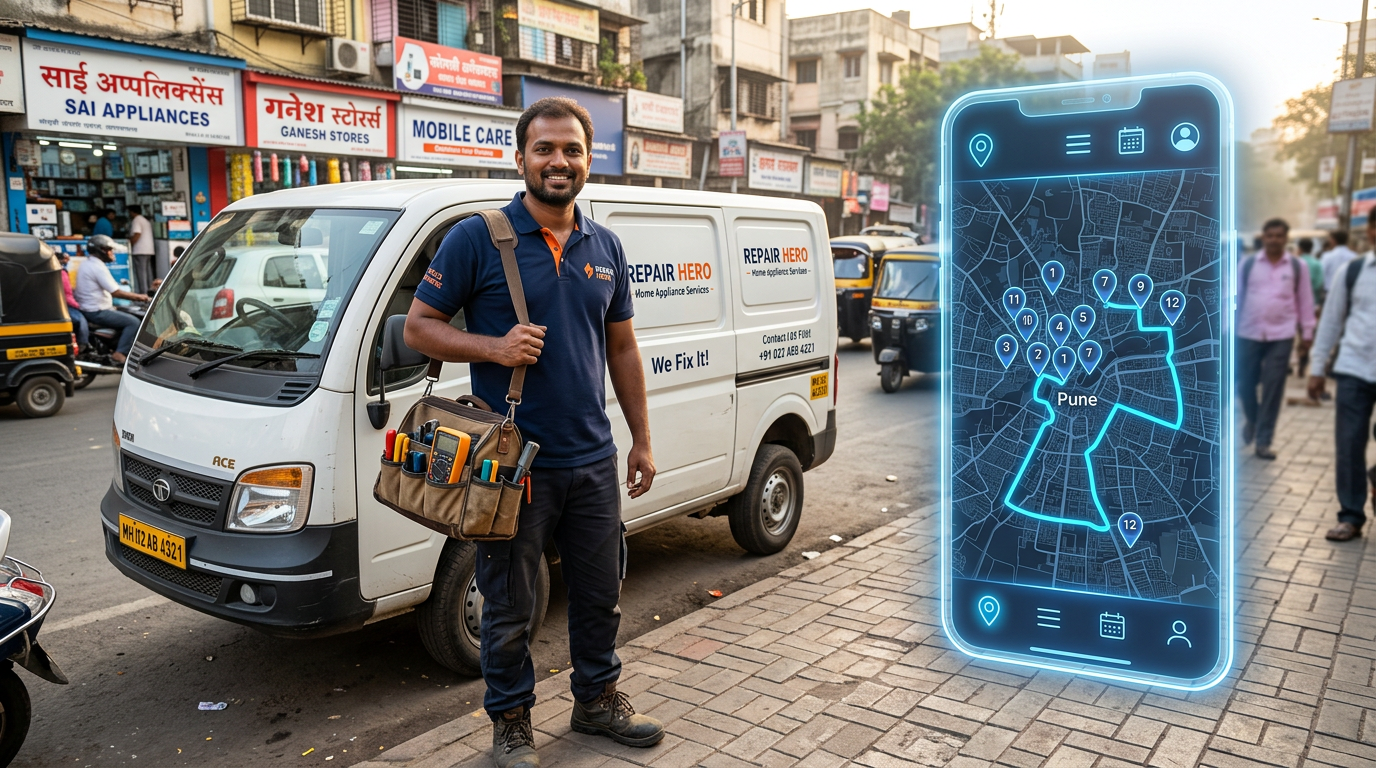
The Business Idea: Repair Operating System
Own the stack from customer or brand intake through closure: structured diagnosis, technician matching, route optimization, parts sourcing, SLA tracking, warranty capture, and upsell modules (filters, stabilizers, AMC nudges). Brands pay for outcomes—first-time fix rate, cost per completed job, repeat failure rate—not vanity lead counts. Micro-fulfillment lives in partner stores, apartment hubs, or lockers positioned from demand priors.
North-star metrics (publish these in SEO case posts)
Route minutes per completed job, first-time fix %, parts pick time, repeat failure within 30 days. Founders googling field service automation and future business trends gravitate to quantified stories—give them numbers.
How It Works: User Journey & System Flow
- Intake: Chat, voice, or brand portal; LLM extracts structured fields (appliance, symptom, media, entitlement).
- Triage model: Maps symptoms to probable SKUs, skill tier, and expected duration bands.
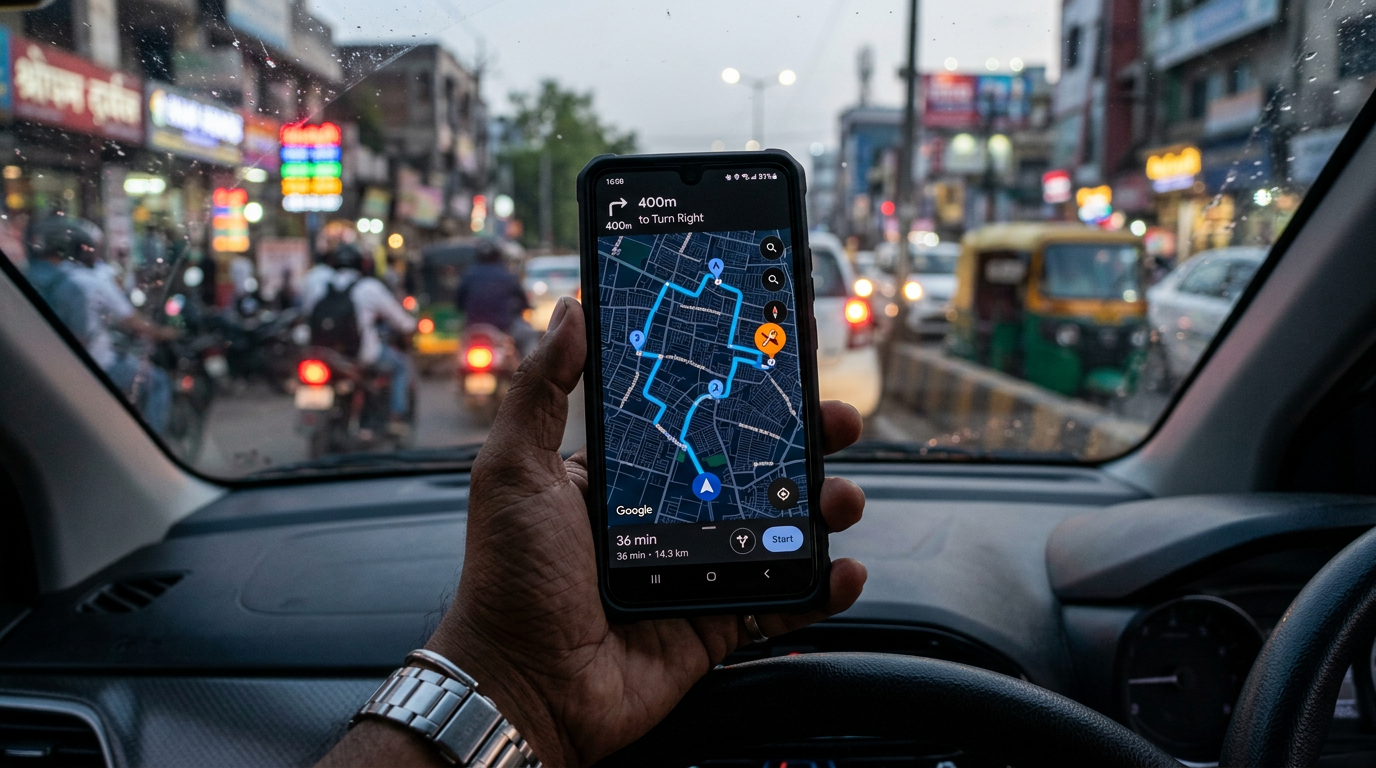
- Batching engine: Merges jobs under radius, time windows, skills, and parts feasibility—respecting hard SLAs for premium tiers.
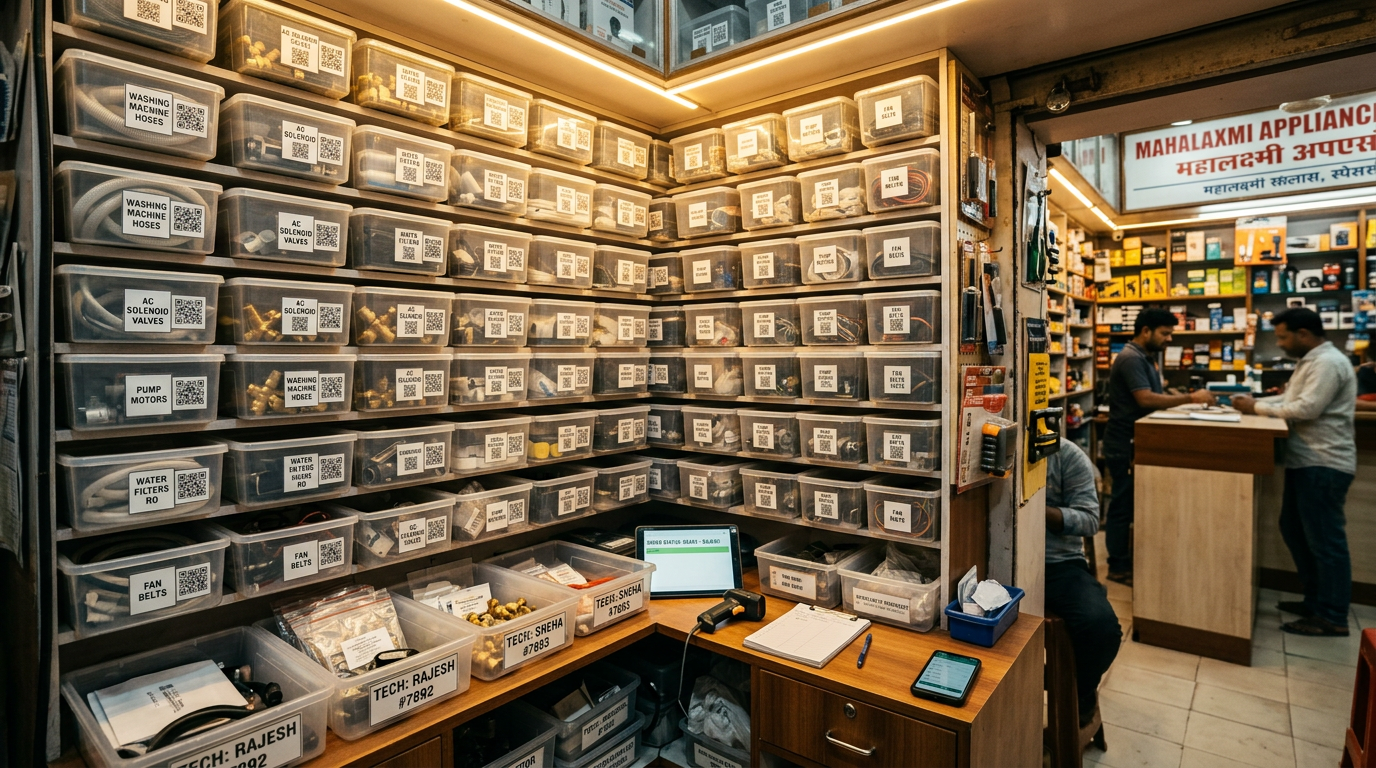
- Parts plan: Suggests van prep lists and locker pulls; forecasts next week’s locker assortment per micro-cell.
- Execution app: Offline-first checklists, evidence photos, payments, spare consumption logging.
- Learning loop: Actual SKU usage updates priors; chronic mis-triage triggers prompt fixes.
Technology Stack
AI & data
Structured-output LLMs for intake; fine-tuned classifiers where volume justifies; guardrails on safety advice (“gas leak” flows escalate to human/dispatch). Whisper-class ASR for regional languages per our voice commerce thesis.
Optimization
OR-Tools or custom heuristics with simulations; shadow mode before production routing changes. For SEO, publish a plain-English post on how you balance SLA risk vs batching—founders search these phrases.
Fulfillment & hardware
Locker APIs, partner POS integrations for consignment parts, and anti-shrink controls (access logs, camera policies). Mobile apps must survive low connectivity basements and society compounds common in Indian metros.
Real-World Scenarios
Scenario A — Appliance OEM, tier-2 belt
Monday generates twelve thin jobs inside a six-kilometer band. The OS merges them into three technician arcs, pre-positions four high-probability SKUs in a partner locker, and reserves a senior tech for two complex calls only. First-time fix climbs nineteen points; cost per completed job falls double digits. Marketing can cite those figures in long-form startup ideas 2026 articles—exactly the proof buyers want.
Scenario B — Facility manager for gated communities
Common failures (pumps, RO, minor electricals) repeat across towers. The OS learns tower-level priors, negotiates batch windows with society admins, and offers subscription hygiene visits that flatten peak loads—turning complaints into predictable routes.
Revenue Model
- Take rate on verified completions—not raw leads.
- SaaS to OEMs and FM companies for orchestration, analytics, and SLA governance.
- Locker & consignment revenue shares with partner retailers.
- Insights SKU—warranty analytics sold back to brands to reduce RMA costs.
Start with one city cluster until network effects appear; premature multi-city expansion kills unit economics.
Market Potential
Authorized service networks, D2C hardware brands, solar and water-purifier installers, and large apartment managers all share the travel-tax problem. India’s smartphone depth and UPI payouts make technician incentives tractable. Globally, the playbook exports anywhere post-sale service is fragmented—position content for hyperlocal services AI and automation startups keywords.
Competitive Landscape
- Lead marketplaces: Optimize matching; under-invest in parts staging and batching.
- FSM incumbents: Strong ticketing; weaker hyperlocal density optimization out of the box.
- In-house OEM tools: Often legacy; opportunity for modern AI intake + optimization layer.
Go-to-Market Strategy
- Win one OEM or FM anchor in a dense pin-code cluster.
- Publish before/after route metrics (SEO magnets).
- Recruit partner shops for consignment SKUs with rev-share, not rent-first locker economics.
- Layer voice intake in Hindi/regional languages to widen funnel without app friction.
Scalability & Unit Economics
Density improves optimization quality; better optimization attracts more volume—classic flywheel. Vertical adapters (appliance vs solar) reuse the core engine. Document the math publicly to rank for long-tail tech startup models queries comparing marketplace vs OS approaches.
Risks & Mitigation
- Inventory shrinkage: Access control, audits, aligned incentives.
- Partner churn: Transparent earnings dashboards, faster payouts.
- Over-automation of safety: Hard escalation paths for hazards.
- LLM mis-triage: Confidence thresholds and human review for high-risk categories.
Why This Idea Can Win
- KPI moat beats landing-page moat.
- Brand budgets follow post-sale NPS and warranty cost.
- Data loop from parts consumption is hard to replicate quickly.
Future Expansion
Tele-assist for junior techs, small AMRs for last-50-meter parts handoff, preventive maintenance subscriptions informed by failure priors—each deepens LTV while staying on-brand as an operating system, not a coupon app.
FAQ — Hyperlocal Repair OS, Field Service AI & Predictive Parts (2026)
What is a Hyperlocal Repair OS?+
Operations software that batches thin repair jobs, optimizes routes, stages probable parts near demand, and measures first-time fix—not a simple lead marketplace.
Why is this a strong startup idea for 2026?+
LLMs structure messy customer language; mobile penetration and UPI make payouts frictionless; brands urgently need post-sale margin control—timing aligns for automation startups with ops depth.
Do I need smart lockers on day one?+
No. Start with optimized van stock and trusted partner shop consignment; add lockers when density justifies fixed costs.
How does SEO help this concept reach founders?+
Publish long-form guides targeting field service automation, hyperlocal services AI, predictive fulfillment, and tech startup models—use structured FAQs and descriptive image alt text like this page.
What metrics should investors see?+
Route minutes per job, first-time fix rate, parts pick time, partner gross margin, and repeat failure rates—not lead volume alone.
How is this different from Uber for technicians?+
Ride-hailing optimizes one trip; this optimizes batches, parts location, and diagnostic quality—different constraints and data.
What AI is actually necessary?+
Intake/triage and forecasting first; skip fancy models until outcome logging is disciplined.
Can this model expand beyond appliances?+
Yes—solar, RO, HVAC lite, and smart-home SKUs share the same routing and staging spine with different priors.
Have Questions About This Idea?
Ask our team — we'll get back with detailed advice.